

The Three Questions That Will Make or Break Your Church Acoustics
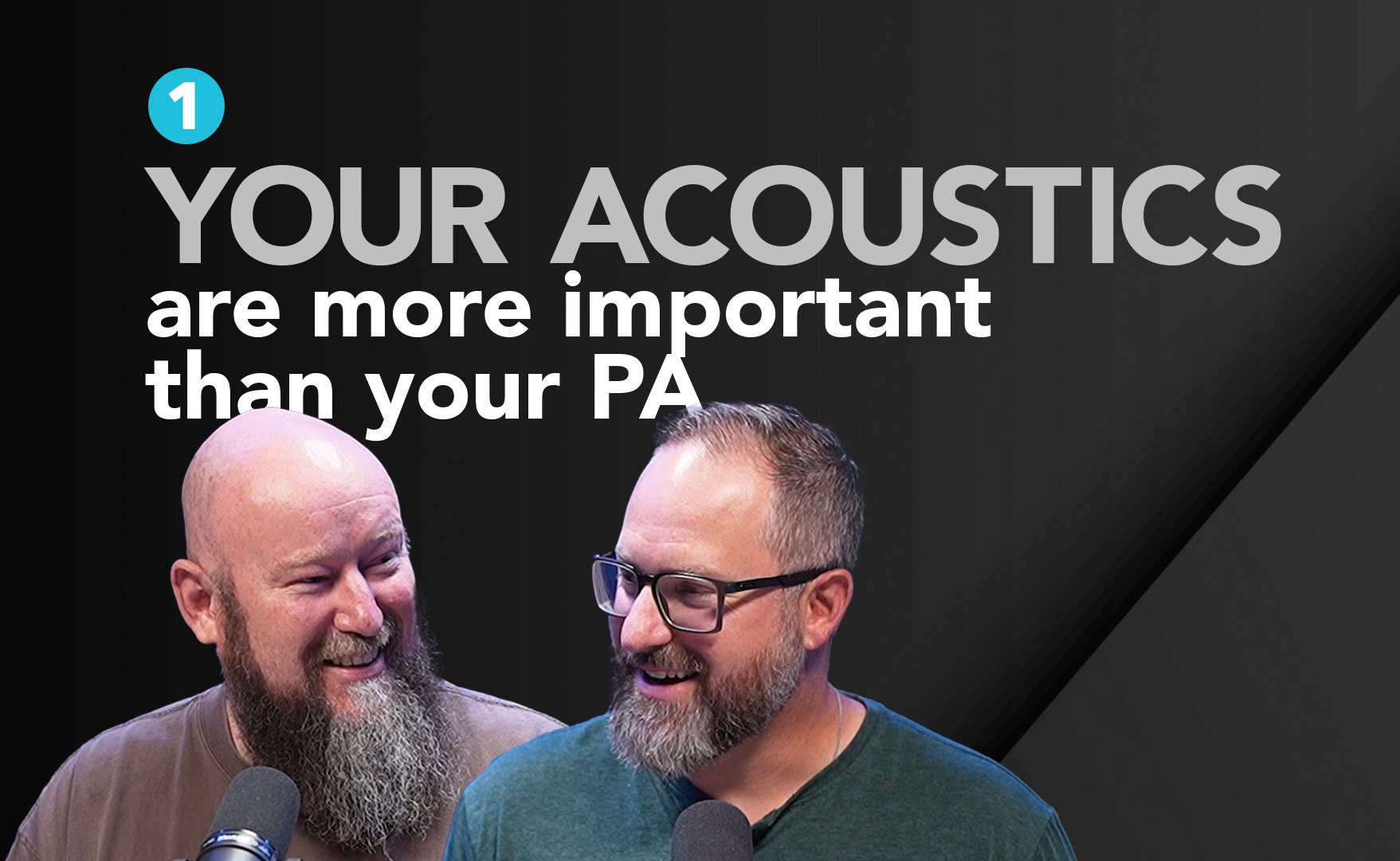
Look, we've seen it a hundred times. A church drops six figures on a pristine PA system — the kind that would make an arena engineer weep with joy — only to have it sound like it's trapped in a concrete parking garage.
The culprit? Usually the same thing: nobody asked the right questions before the building went up.
Here's the thing about acoustics — it's the foundation everything else sits on. You can have the most meticulously designed audio system in America, but if you're pumping it into a room that's acoustically backwards, you're just polishing a mess.
So before anyone breaks ground, before the architect starts sketching dream sequences, before you even think about speaker hangs — let's talk about the three questions that actually matter.
Question One: What's Your Musical Style?
Not the PR answer. The real one.
Are we talking a five-piece band that likes to lean into modern worship with a healthy dose of bass? Or is this a traditional choir and orchestra situation where the music needs to bloom naturally from the stage?
Because here's what most people miss: these two approaches require fundamentally different acoustic environments.
That rock-and-roll Sunday morning vibe? We're controlling stage noise, treating reflections, keeping things tight. We want clarity, punch, and a kick drum that hits you square in the chest without rattling the ceiling tiles.
But if you've got a 40-voice choir that needs to project into the room? We're doing the opposite. We're letting their sound breathe. We're using the room as an instrument. Over-treat that space and you've just turned your choir into a whisper.
And if your answer is "both" — well, that's when things get interesting. It's doable. But it requires finesse, not guesswork.
Question Two: How Much Do You Want Your People to Hear Each Other?
This one's sneakier than it sounds.
Ten years ago, the default answer was usually: "Not much. We want the band to be big enough that people don't feel awkward singing."
Fair. Nobody wants to be that person who sounds like a wounded elk during the bridge.
But lately? The vibe has shifted. Churches are leaning back into communal worship. They want their congregation to feel like they're part of something collective — not just spectators at a concert.
Andrew Stark, one of our Solution Architects, has watched this evolution firsthand: "I feel like the vibe is like, no, we kind of just want a collective voice. We don't wanna hear individuals. We kinda just want people to feel like there's a collective voice."
That means we need to build in acoustic engagement. Reflections that send voices back into the room. Ceiling heights that don't launch sound into the stratosphere and leave it there for three seconds. Design choices that say, "Your voice matters here."
If you want your people to sing like they mean it, they need to hear that other people are singing like they mean it.
Question Three: What's Your Actual Volume Target?
And no, "loud" is not an answer.
Neither is "somewhere around 95 dB" if the person saying it doesn't know what that actually feels like in the context of their room, their style, their mix.
SPL is one of the most misunderstood specs in the game. You can have a 92 dB mix that feels like an ice pick to the temple or a 100 dB mix that sits comfortably in the pocket. It all depends on how the room is shaped, how it's treated, and what you're doing with that low end.
One of our favorite projects? A pastor told us straight up: "I want to mix around 90 dB, but I want to feel the kick hit me in the chest."
Now that's a vision.
As our Solution Architect Andrew Stark puts it: "This is gonna be less about the PA and it's gonna be a whole lot more with what we do acoustically in the room to make sure when that sub hits and throws back a hundred feet, you're able to still feel it in your chest."
The solution had almost nothing to do with the PA. It was all about the acoustics — specifically, how we controlled the low frequencies so they moved through the room cleanly instead of building up into a muddy mess.
The Real Cost of Getting It Wrong
Here's the uncomfortable truth: acoustic decisions last longer than any gear you'll ever buy.
A great PA system might give you 15 solid years if you take care of it. But the shape of your room? The materials on your walls? The way sound moves through your space? That's a 40-year decision. Maybe 50.
Andrew puts it plainly: "It is more important to invest the money in treating a space and doing it well. 'Cause that decision is potentially a 20, 30, 40, 50 year decision versus a PA, which, you know, if done well, it's maybe a 15 year decision."
So when churches ask us where to invest their budget, we don't blink: get the acoustics right first. If that means pulling money out of the PA line item to afford proper treatment, do it. You'll thank us on Sunday.
Because at the end of the day, no amount of processing, no miracle speaker array, no mixing wizardry can fix a room that's fighting you.
Start With Vision, End With Excellence
At Summit, we don't walk into a project with a one-size-fits-all playbook. We ask questions. We listen. We figure out what you're actually trying to create — and then we build the environment that makes it happen.
Because the goal isn't just to install a system. It's to serve the moment when your congregation steps into that room, the lights drop, and everything just… works.
That's the magic. And it starts with asking the right questions.
Ready to make sure your space sounds as good as your vision deserves? Let's talk. We’ve been doing this long enough to know that great acoustics aren't optional — they're essential. Our team has helped hundreds of churches find the sweet spot between their vision and their budget. We’d love to help.
If this sparked ideas, check out the full Gear Follows Vision episode here.