

If Only One Person Can Run It, You've Already Lost
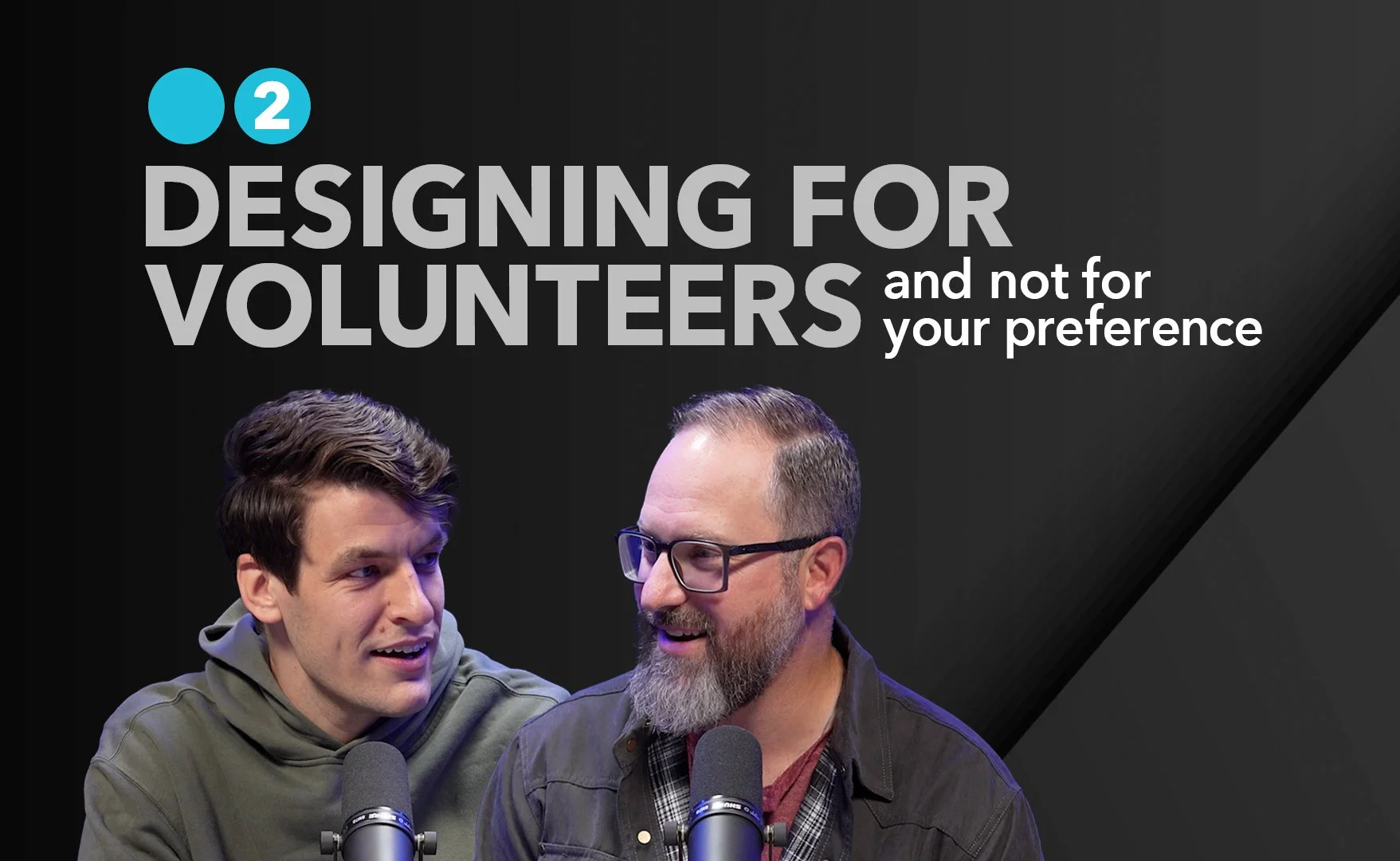
The uncomfortable truth about over-designed church systems — and the philosophy that actually serves your congregation on Sunday morning.
We've seen it a hundred times. Beautiful system. Custom-programmed console. A lighting rig that could make a touring engineer weep with joy. And one exhausted full-time staff member who is the only human being on the planet who knows how to run it.
If that's your church, we need to have a conversation. Not because your gear is bad — but because the mission is bigger than the gear. Sunday doesn't wait for the one guy who knows the patch.
"If you have to have full-time staff to run your systems, in a lot of churches, it's over-designed."
That's not a knock on complexity. That's a design problem. And design problems have design solutions.
Your operator is probably a dental hygienist
Most churches in America aren't running a full production crew on weekends. They're running volunteers — smart, capable, generous people who also happen to have careers in nursing, construction, and UPS logistics. On Sunday morning, they're behind a $50,000 camera chain or a sophisticated audio console. The question worth asking: did we design this for them, or for us?
There's a natural bias in the AVL world toward the most capable gear. We know what the best tools can do, and honestly, it's impressive. But "most capable" and "most appropriate" are not the same thing. Designing around who's actually in the room — that's where the real craft lives.
Complexity is easy. Elegance is hard.
Anyone can stack up a sophisticated system. The harder problem is building something that a volunteer can walk into at 6:00 AM — before coffee, before the chaos — and confidently put together. That requires thinking through their experience at every decision point: Where does this wire go? What happens if something crashes? Can they get light on stage without calling anyone?
The answer we keep coming back to: one-to-one logic. Color-coded infrastructure. Analog patch points where human hands need to touch the signal chain. Labels that make sense without a set of drawings. If your system requires tribal knowledge to operate, that's not impressive — that's a liability.
The audit question every church should ask
Am I the only person who can run this?
If something goes wrong mid-service, can a volunteer troubleshoot it?
Does the infrastructure make sense without opening a manual?
Is our system complexity driven by ministry need — or gear enthusiasm?
Guardrails aren't limitations. They're good design.
There's a version of "volunteer-friendly" that goes too far — systems so locked down that when something breaks, nobody has any idea what to do. That's not simplicity. That's a different kind of failure. The goal is designing guardrails: clear paths forward, obvious fallbacks, and enough transparency that a capable volunteer can learn the system over time.
A good show file for a volunteer lighting operator doesn't just run the show — it also makes sure there's always a clear path to getting front wash on stage. Because communion with spinning movers is not the vibe.
A good audio infrastructure doesn't just hide the complexity — it reveals enough of it, in the right places, that a volunteer can build confidence and skill over months and years. You're not dumbing it down. You're scaling it appropriately.
Buy for where you are. Build room to grow.
Here's the heart check worth taking before your next system purchase: are you buying for the ministry you have, or the ministry you imagine having in five years? There's nothing wrong with planning ahead. There's something very wrong with a $300,000 system serving a 400-person congregation with three volunteers and a part-time worship director.
Minimum reliable system. That's the target. Not cheapest. Not most impressive. Reliable — something that gives you confidence that it will simply work, weekend after weekend, in the hands of whoever shows up to serve.
The systems that serve churches best aren't the ones that make us look good on the install day. They're the ones still running smoothly three years later, operated by a rotating team of faithful volunteers who've grown into them. That's the real flex.
Sunday should be breathtaking — not because the system is complex, but because it got out of the way and let the moment happen.
If you're wondering whether your current system is over-designed, that question alone is worth sitting with. And if you want a set of fresh eyes on it, we know a thing or two about making the complicated feel effortless.
Curious about the full convo? Check out the Gear Follows Vision episode here.
Got a project idea that’s stressing you out? Our team has helped hundreds of churches across the nation – if you have any questions you’d like a second opinion on, we’d love to help.