

Blue Plugs Into Blue: How Smart Infrastructure Empowers Church Volunteers
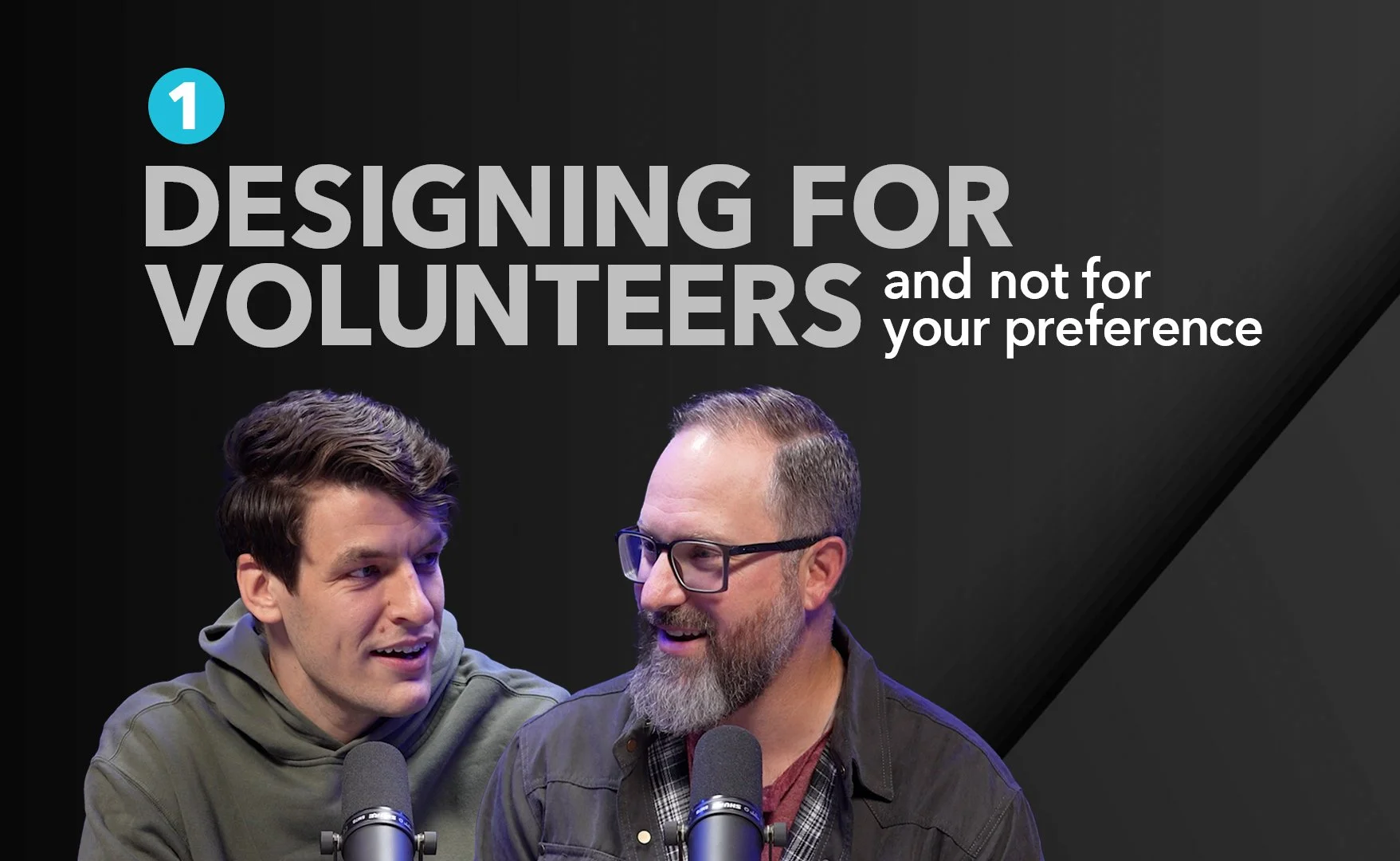
The wire behind the wall matters more than you think. How intentional labeling, color-coding, and infrastructure design turn complex systems into something anyone can run.
There's a quiet magic in a system that just works. Not because it's simple — it might be anything but. The magic is that the person running it doesn't need to think too hard about the gear. They can think about the service.
That's the goal of smart infrastructure design. And it starts somewhere most people never think about: the label on a floor box.
The patch point problem
In a moderately complex church audio system, there can be three or four separate digital patch points between a microphone and the channel strip it lands on. Console patch. Dante network routing. Stage rack I/O. For an experienced full-time engineer, this is second nature. They carry it all in their head, and they move fast.
For a volunteer who runs sound twice a month and works in healthcare the other five days? It's a maze with no map.
The answer isn't to hide the complexity — it's to surface it in the right places. Keep the digital patching fixed and invisible. Let the volunteer touch the analog patch where they can see it, feel it, and trace it with their eyes. One cable, one label, one obvious connection. That's not dumbing it down. That's respecting someone's time and reducing their cognitive load so they can focus on what actually matters: the mix.
"A volunteer should never need to open a set of drawings to figure out where a wire goes. It should just be intuitive."
Color is a language
On portable systems especially, we've learned to treat color like vocabulary. Every trunk line has a color family. Every connection point matches. When a volunteer walks in at 6:00 AM to set up a portable rig, they're not decoding a system — they're following a visual grammar they already know. Blue plugs into blue. Red into red. You're off to the races before the coffee kicks in.
This isn't just about convenience. It's about confidence. A volunteer who can set up a system without second-guessing every connection is a volunteer who comes back the next Sunday. And the Sunday after that. That kind of retention is worth more than any spec sheet.
The case for patch bays in video
Video infrastructure used to be a bit more rigid — cameras lived in fixed positions, signals ran fixed routes. That's not how churches actually work. Pastors move. Directors change their minds twenty minutes before service. A women's Bible study wants to use the breakout room on a Tuesday night, and nobody wants to call the production director at 7:00 PM.
A well-designed video patch bay changes the answer from "no" to "yes — go for it." Physical patch bays with clear labeling on both sides give volunteers a tactile, visual way to reroute cameras without touching software, dashboards, or any system they haven't been trained on.
The labeling convention matters here too. We learned, sometimes painfully, that "camera one" means different things to different video directors — is it positional? Is it the teaching camera? The debate is genuinely heated and entirely unresolvable. So we stopped arguing and started using letters for floor box positions and numbers for router destinations. Camera D patches to input 2. Unambiguous. No tribal knowledge required.
Three principles behind every infrastructure decision
Principle 1: One-to-one logic. Mic 1 should trace to one obvious destination. Every patch point in between should be invisible or fixed.
Principle 2: Color as communication. Color-code infrastructure so that connections are visually obvious. Eliminate guesswork at the physical layer.
Principle 3: Tactile over digital. When possible, let volunteers patch at the physical layer — visible, traceable, and easy to troubleshoot.
Lighting: complexity meeting simplicity
The lighting console is where the gap between professional instinct and volunteer reality gets widest. A full-featured professional console is an extraordinary instrument in the right hands. In the wrong context, it's a machine that does nothing you want it to do straight out of the box — and everything you don't want it to do when something goes sideways.
Smart lighting design for volunteer-driven churches starts with a non-negotiable: there must always be a clear path to getting light on stage. Front wash fader. House lights. A redundant playback server if the console crashes. These aren't backup options — they're the foundation. Build the elaborate programming on top of them, not instead of them.
From there, the best show files are layered. A volunteer can walk in, press play, and have a great service. As they build confidence over weeks and months, you can show them how to grab a position palette, make a quick edit, adjust a look for a special service. They grow into the system rather than being overwhelmed by it on day one.
If everything went wrong at once — console froze, network hiccupped, stage went dark — could a volunteer get the service back on its feet without calling anyone? If the answer is no, the design isn't finished yet.
The rooms nobody thinks about
Production volunteers get a lot of design attention. The unsung infrastructure challenge is everywhere else — breakout rooms, green rooms, classrooms, women's Bible studies meeting on a Tuesday night. These spaces need technology that a non-production person can operate completely on their own.
The good news: complex programming on the back end can produce remarkably simple interfaces on the front end. A button that brings up the lights, starts the display, and enables the mic in a breakout room is the result of real engineering work. The person pressing it doesn't need to know any of that. They just need it to work. That's the invisible excellence that nobody applauds — and that we think about on every project.
Infrastructure is a long game
Every labeling decision, every color choice, every patch convention — these compound over time. The infrastructure you install today will be operated by volunteers you haven't met yet, in services three years from now, by a production team that may have turned over entirely. Design for that person.
Because the most powerful thing a well-designed system can do is get completely out of the way — and let the worship happen.
Curious about the full convo? Check out the Gear Follows Vision episode here.
Got a project idea that’s stressing you out? Our team has helped hundreds of churches across the nation – if you have any questions you’d like a second opinion on, we’d love to help.